


Wellbeing Starts with a Decision
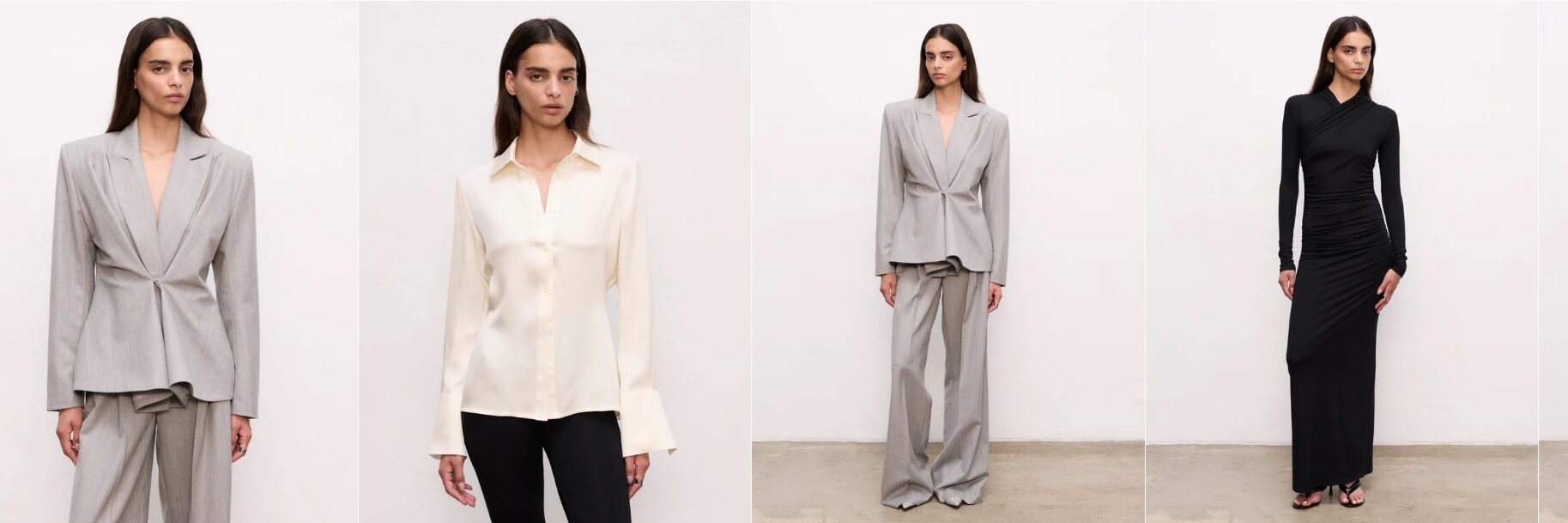
Wellbeing begins the moment we feel like we’re doing something good — not just for ourselves, but for the world around us. In an era of overproduction and hyper-consumption, it’s becoming increasingly clear that comfort isn’t about having more. It’s about choosing wisely. In this issue dedicated to wellbeing, I sat down with the founders of Lagom — a brand recently recognised in the fourth round of the Startup Booster for Social Impact programme run by SWPS University. Their model, Lagom Cycle, is an attempt at genuine change in the fashion industry: from the way garments are designed, all the way through to responsibility for a product’s entire lifecycle. The concept weaves together minimalism, circular design, and customer education. We talked about how it all started, what Lagom Cycle actually is, and why fashion can be a space for real accountability.
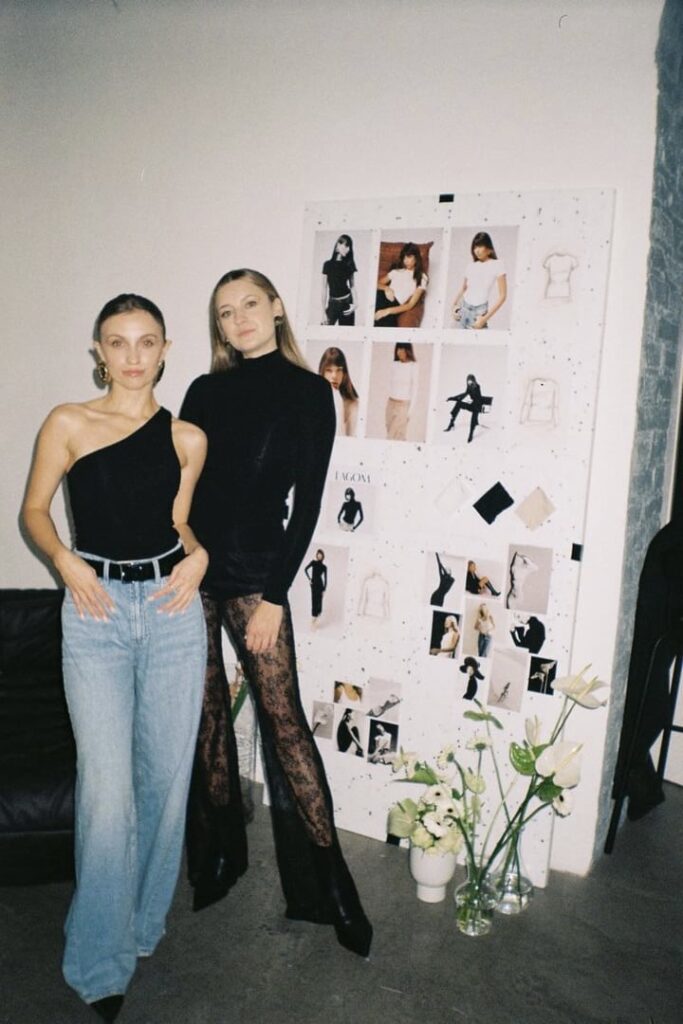
Anna Domin: Congratulations on the recognition. It’s a significant moment — not just symbolically, but in terms of your growth, especially for an independent brand that has built its position from the ground up, without the backing of a major corporation. Lagom creates capsule collections for women: minimalist, timeless pieces designed with quality and longevity in mind. You’ve been at it for several years now, growing organically, learning the market, production, logistics. And now you’re launching a new project: Lagom Cycle. Before we get into that, I’d love to go back to the beginning. How did this all start? What made you want to build a brand in such a saturated, demanding industry — one with the ambition of being, from day one, “just right”?
Pola Błądek: It started very intuitively. We met at university and immediately bonded over a shared aesthetic, a need for quality, and a desire to build something of our own. We didn’t have a grand business plan back then — more of an urge to create things we couldn’t find anywhere on the market.
Angelika Staniszewska: We wanted a wardrobe full of pieces that always work. The kind you reach for without thinking — and just know they’ll look right, whether you’re in a meeting, at work, or at home. No oversized logos, no seasonal pressure, no compromises on quality. We felt the market was flooded with clothes, but very few of them actually stood the test of time. We wanted to create things that were timeless and minimalist, built on good construction and quality fabrics. Not a one-season trend, but wardrobe staples you’d keep for years. The name “lagom” came naturally — it’s a Swedish word that means “not too much, not too little — just right.”
Pola Błądek: In the beginning, there was no grand strategy — just a simple spreadsheet. We funded everything ourselves. We learned about production, fabrics, working with manufacturers. It was very hands-on. It wasn’t until later that we realised this had stopped being a hobby and become a real business.
Angelika Staniszewska: What’s interesting is that Lagom was remote from the start. We met at university, but our lives took us in different directions — Pola moved to Barcelona, I stayed in Warsaw. The business was online from day one, and that never felt like a problem. If anything, it taught us a lot about flexibility, and about trusting each other and the project. My role has always been to translate ideas into tangible products; Pola handles the creative strategy.
I speak with a lot of fashion brand founders, and I know that building a brand is challenging enough on its own: self-funding production, minimum fabric order quantities, logistics, margins, storage, returns, the constant pressure to sell. And then there’s the competition from large retail chains producing at scale and at a fraction of the cost. Most brands in that environment are simply trying to survive. Yet you chose to do more than grow your sales — you chose to pause and ask a bigger question: what happens to your product after it’s been bought? What sparked that shift in thinking? When did you feel that Lagom needed to be more than just a beautiful capsule brand?
Pola Błądek: I think the trigger was seeing the scale. In 2024, sales started growing faster than we expected. One day we received dozens of orders in a single day, and that was a signal: this is no longer a side project. The natural response might have been to accelerate — produce more, increase volume. Instead, we chose to stop. In 2025 we deliberately stepped back, because we knew that if we were going to grow, it had to be on our own terms. We had to ask ourselves what Lagom was really meant to be — for us and for our customers. We didn’t want to make more. We wanted to make better.
Angelika Staniszewska: We started looking much more deliberately at the whole way we operate — not just production, margins, and logistics, but also the real-world impact every product leaves behind. Because selling something is one thing; being accountable for what you put into the world is another. At the same time, we kept listening to our customers. Their feedback has always been central to us. When we got comments about sizing, we adjusted straight away. That taught us that the relationship matters more than the pace.
That kind of decision takes courage. When sales are climbing, choosing to slow down — or even take a step back — is not something fashion brands typically do. But does stepping back let you see more clearly? What did you see when you took that step?
Pola Błądek: Designing for longevity has always been our core idea. Slowing down let us look at the whole process more holistically. We realised that if we chased pure sales growth, we’d risk losing what makes us who we are: mindfulness, the relationship with our customers, quality. We also saw that responsibility can’t be an add-on. It can’t just be a message. It has to be built into the product and into how the brand operates.
Angelika Staniszewska: That’s when we started thinking about the full lifecycle of what we make — not just how to design it, but what happens to it further down the line. It was a conscious decision to go beyond just making clothes. We began looking for a model that would bring design, production, and education together into one coherent whole. And that’s how work on Lagom Cycle began.
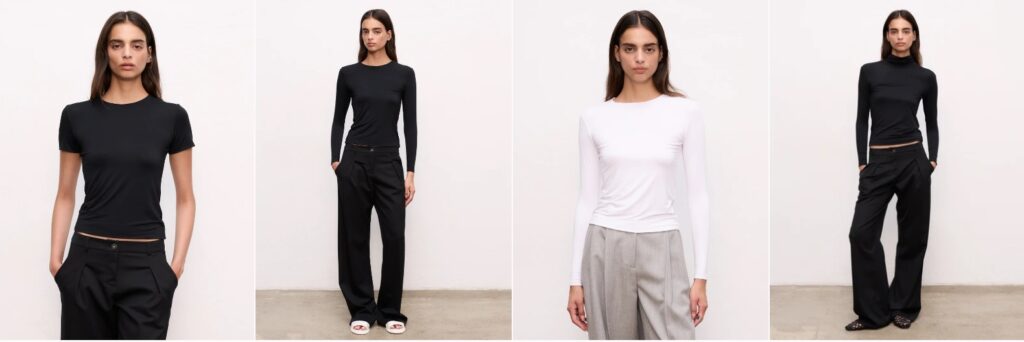
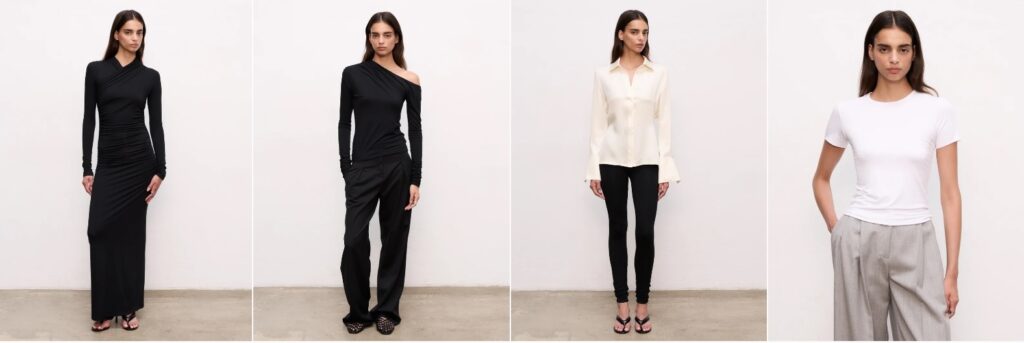
So what is Lagom Cycle in practice? What does it actually change about the way you operate day-to-day?
Pola Błądek: Lagom Cycle is, above all, a shift in how we think about the product. We start with circular design — which means that from the construction stage, we’re already asking: what happens to this piece later? Can it be easily altered, repaired, or recycled? Fabric selection is also key. Our new focus is on innovative textiles and deadstock materials from established fashion houses. We’d rather use what already exists than drive new production. The second element is the pre-order model. We produce based on real orders, rather than trying to predict the market. That means no overproduction, and much more control over scale. In practice, though, it bumps up against industry realities — fabric suppliers often have minimum orders in the hundreds of kilograms, which is a real challenge for an independent brand. It’s not the easiest business model, but it means we’re not building up stock that will eventually become waste.
Angelika Staniszewska: The third element is education. We’ve come to understand that even the best-designed product won’t fulfil its purpose if it’s not cared for properly. If someone buys 100% wool trousers and washes them at 50 degrees, they’ll ruin them after one wash and need to buy new ones. At that point, the whole idea of circularity falls apart. We want to talk about garment care, about the quality of materials, about how to extend the life of clothes — and that’s just as important to us as the design itself.
Lagom Cycle sounds like a values-driven model. But the fashion market can be unforgiving: minimum fabric orders, production costs, logistics, price pressure. Can responsibility and profitability realistically coexist?
Pola Błądek: We quickly realised that if we wanted to operate responsibly, we had to be just as responsible about the numbers. Pre-order brings greater unpredictability, longer lead times, and the need to build trust. Minimum material orders are a real challenge, especially for a smaller brand. At a certain point we felt we needed outside support. We reached out to Martyna Zastawna and joined an accelerator programme to get our business model in order. That was a really important stage for us — it helped us translate our instincts and values into concrete financial assumptions.
Angelika Staniszewska: That work helped us see Lagom not just as an aesthetic brand with a purpose, but as a project that needs to be economically stable. Responsibility can’t be a romantic idea. If a brand isn’t profitable, it won’t survive — and if it doesn’t survive, it won’t have any impact.
We started by talking about wellbeing. In a world of fashion built on speed and excess, you’ve chosen mindfulness and a “just right” pace. What does wellbeing mean to you today?
Pola Błądek: For us, wellbeing is about alignment. Knowing that what we do professionally is consistent with who we are. That might sound simple, but in practice it requires a lot of decisions — often harder ones than just taking the easy route. When I think about how this all started: Angelika had just become a mother, I was stepping into the corporate world, and we both had this vision that fashion could be done differently. The fact that we’re here now, that this project is taking real shape — that means a lot to us. And I think that sense of knowing we’re moving in the right direction is, for us, the greatest luxury we have right now.