


mood.farm: Cultivating and Nurturing Wellbeing in Workplace Culture
Paulina Grabowska
We are flooded with deepfakes, disinformation, brainrot content and hundreds of emails. The informational noise of the internet consumes us, yet offices as workplaces sometimes resemble this same chaos. They overwhelm us with random colours, motivational slogans, the chemical smell of newness, exhausting lighting and reverberating acoustics. In such interiors, when we open yet another email, fatigue often appears before we even begin to act.
Paulina Grabowska
A thoughtfully designed and carefully executed interior, however, including technological solutions grounded in biology and nature, can support us in navigating this overstimulation. It can filter out unnecessary tactile and visual noise in favour of patterns that are safe and evolutionarily familiar.
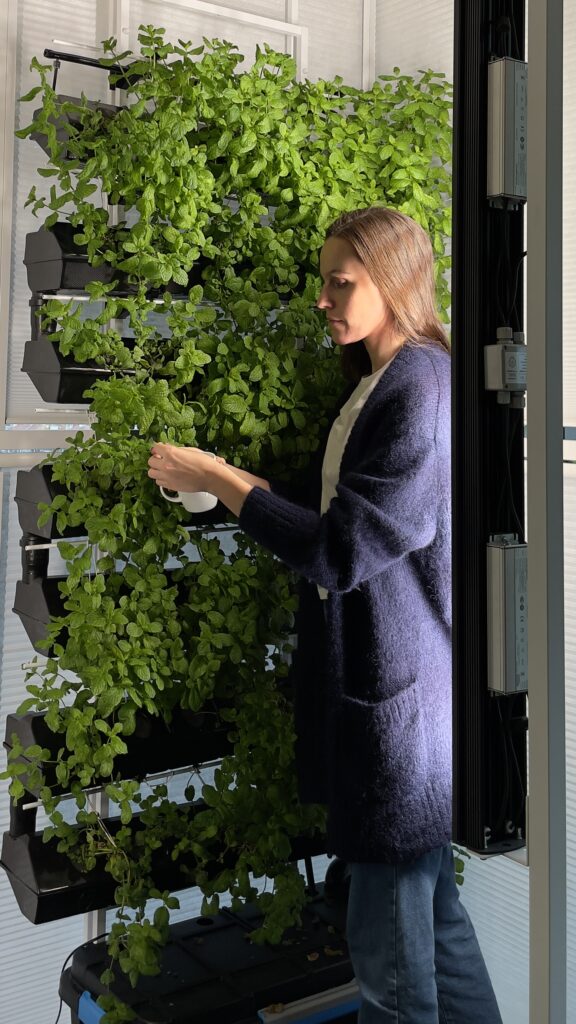
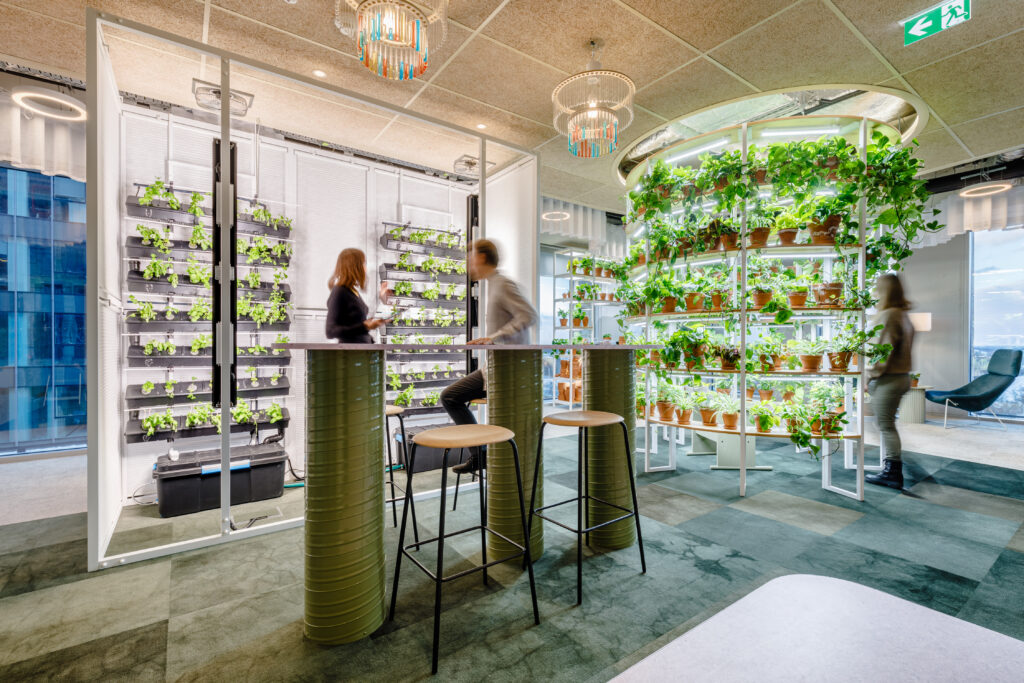
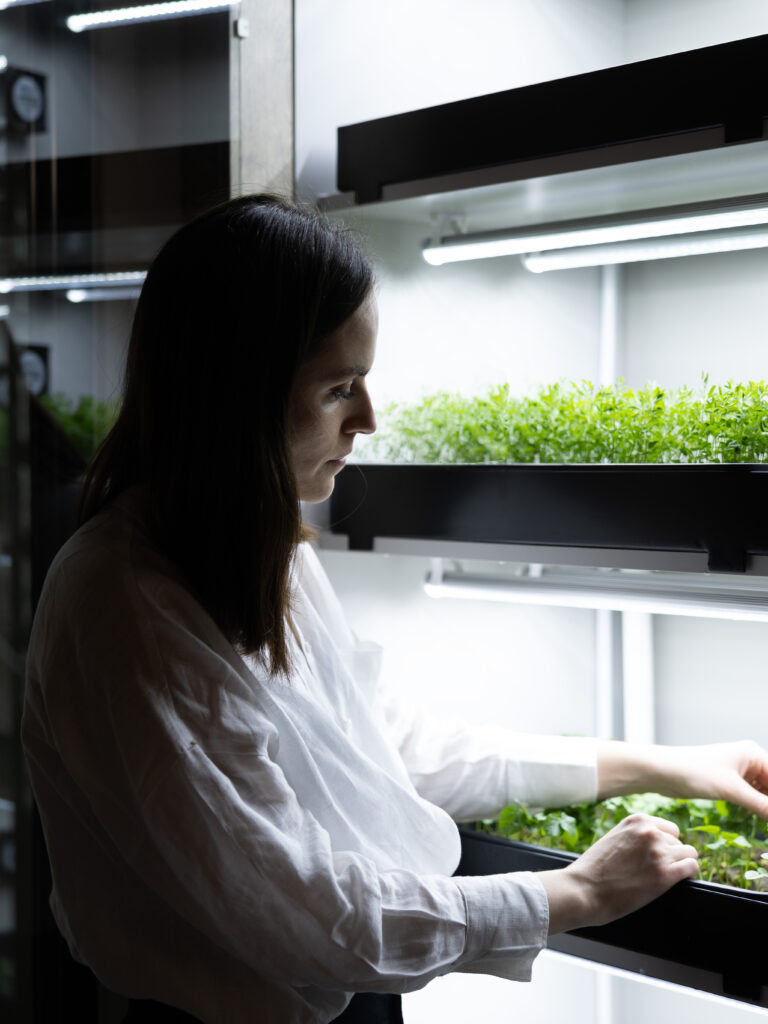
Herbal Tea Point – a vertical hydroponic farm at the ARUP office in Warsaw. ARUP won the prestigious FRAME award as the most beautiful office in the world in 2023. Office design: Workplace. Photo: Adam Grzesik.
In my research, implementation work and business practice, I focus on introducing such patterns into workplaces by creating spaces for health and regeneration. These environments are built around regenerative lighting that simulates sunlight, vertical farms producing healthy food, intelligent hydration systems and biophilic design. All projects and implementations are grounded in applied sciences such as physics, biology and chemistry. These disciplines provide the foundation for a deeper understanding of the processes taking place between our bodies and the spaces intended to support them.
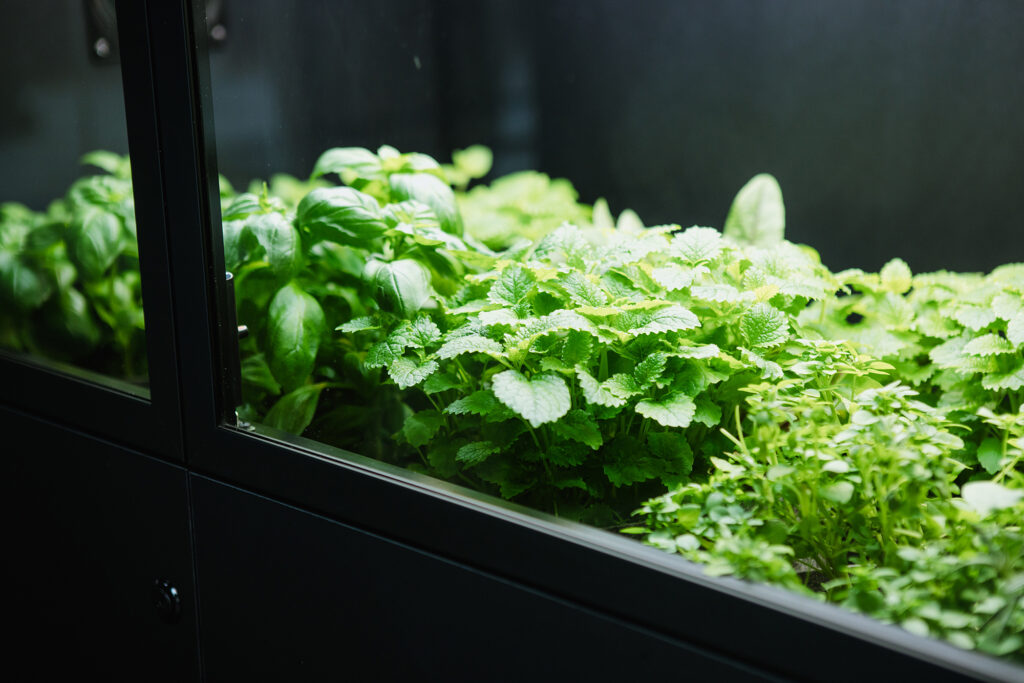
Microgarden – a kitchen microgreens farm at the ARUP office in Warsaw. ARUP won the prestigious FRAME award as the most beautiful office in the world in 2023. Office design: Workplace. Photo: Bartek Barczyk.
For example, our brain, understood as a biological prediction machine, consumes the greatest amount of energy when signals from the environment do not correspond with evolutionary patterns. A simple example is an LED bulb that is too dim or emits an inappropriate colour temperature, diverging from the solar patterns under which humans evolved over the past two million years.
The Nutrition Garden, a vertical farm that provides fresh herbs and microgreens daily at the Sanofi office. Office design: TDG. Photo: Sanofi.
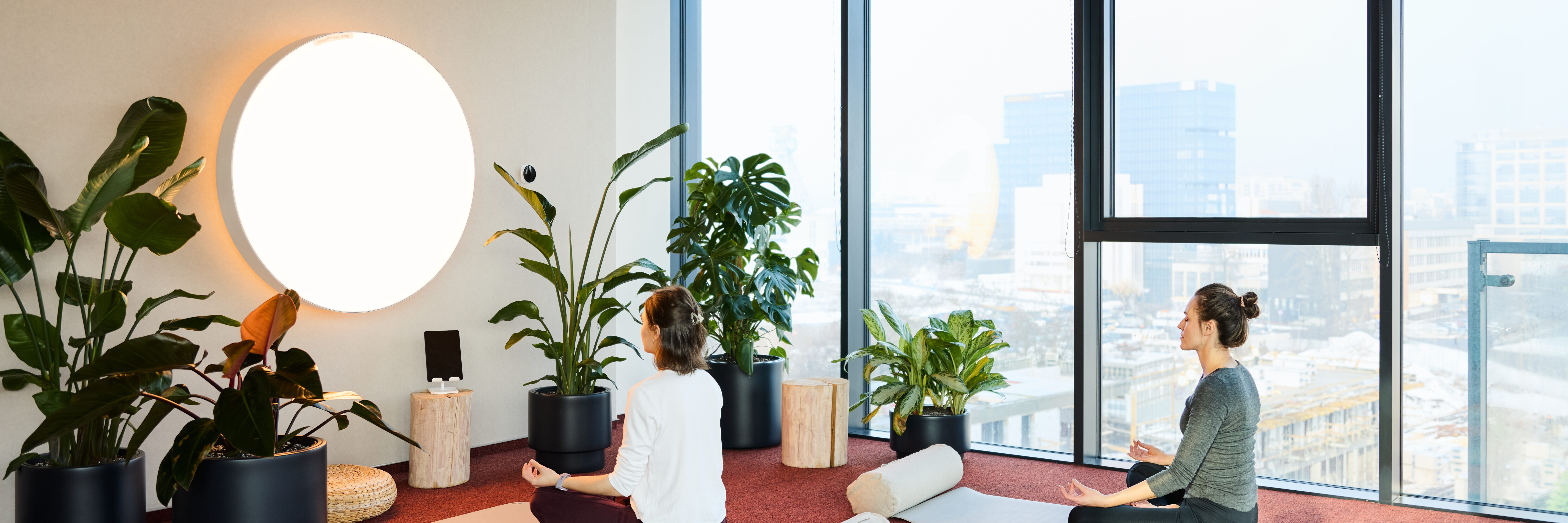
Among other reasons, this led to the creation of the SUN Installation, which simulates sunlight across the visible spectrum from dawn to dusk, while also reproducing invisible radiation perceived by the skin as warmth in the form of infrared radiation. It was designed to stimulate the brain in a healthy way and support the biological clock. This translates into mental clarity during the day and deeper sleep at night, ultimately supporting wellbeing, cognition and metabolism.
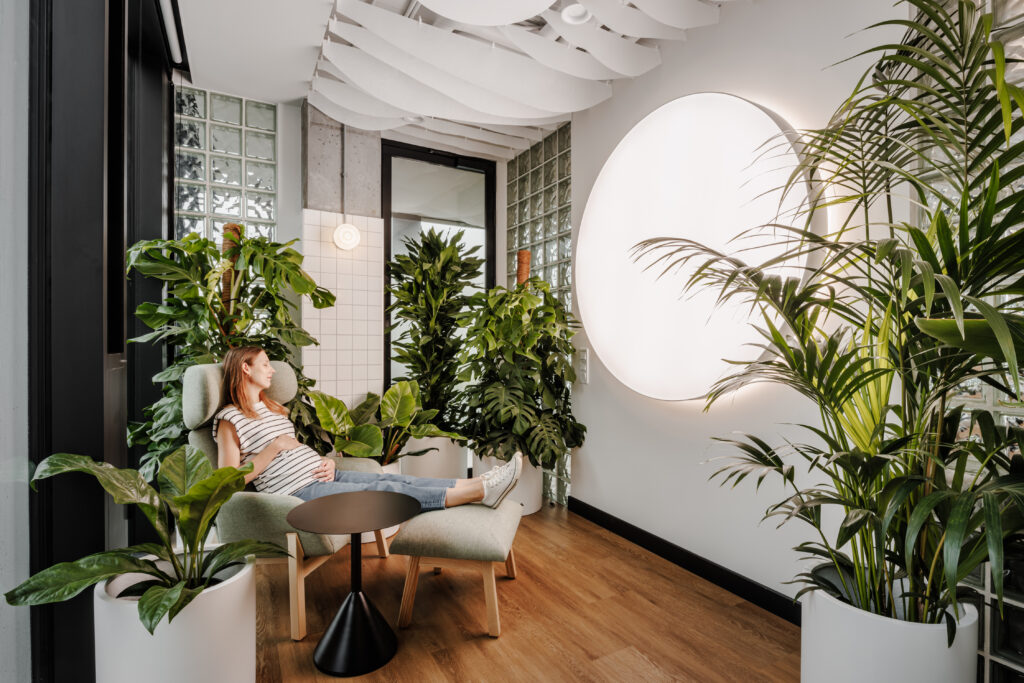
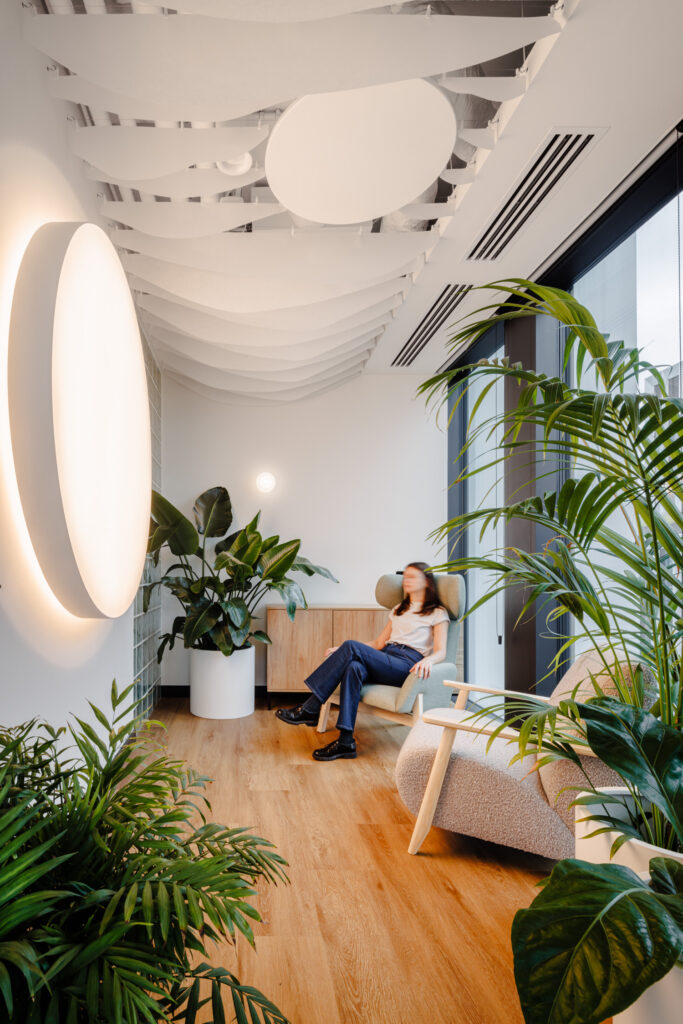
SUN installation – regenerative lighting at the LUX MED headquarters in Warsaw. Office design: Workplace. Photo: Adam Grzesik.
How does it work? By selecting one of nine programmes, for example Morning, we receive intense cool light, a natural trigger of alertness and energy. When such light reaches the retina, it sends a signal to the command centre of the circadian system, the suprachiasmatic nucleus, inhibiting the secretion of the sleep hormone melatonin. This helps the body enter the day with greater mental clarity. Later in the afternoon, selecting Sunset activates warm light that signals the nervous system to shift into a resting mode, supporting healthy sleep hygiene. Some programmes use infrared radiation perceived as soothing warmth, enabling deeper relaxation without sensory overload. The SUN Installation therefore functions as a technological extension of nature within interior spaces, supporting emotional balance and comfort during cloudy days or throughout the autumn and winter seasons.
For the human organism, biologically appropriate light patterns during the day are just as important as the absence of light at night. Darkness supports the synthesis of melatonin, the hormone responsible for healthy sleep. Its precursor is serotonin, a neurotransmitter often referred to as the happiness hormone, which regulates mood, concentration and metabolism and, together with melatonin, governs the circadian rhythm. Interestingly, nearly ninety percent of serotonin is synthesised in the gut. The brain produces its own serotonin from the amino acid tryptophan, which must be supplied through food. Yet this process is not straightforward, because tryptophan competes with other amino acids when crossing the blood–brain barrier and frequently loses that competition.
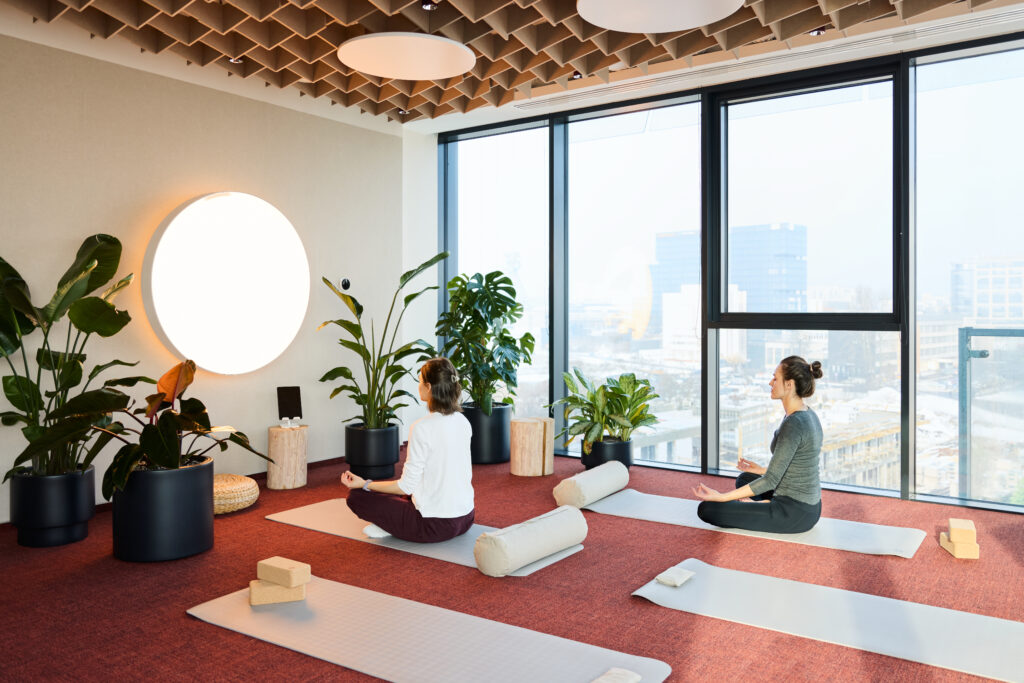
SUN installation – regenerative lighting at the Sopra Steria headquarters in Katowice. Office design: Workplace. Photo: Bianka Gajdzińska
For this reason, the composition of meals becomes extremely important. I educate my clients about this as an additional layer of neural support within workplaces, because almost everyone eats lunch at work. One of the key components supporting the synthesis of serotonin and melatonin are micronutrients found in microgreens and herbs cultivated in vertical office farms and delivered daily to office kitchens. The concentration of vitamins, minerals and antioxidants in microgreens can be several to more than a dozen times higher than in their mature counterparts, making them a condensed form of energy for the human body.
The presence of fresh food in office environments also affects our neurology in multiple ways. Taste, and above all aroma, plays an important role. Herbs such as rosemary, lemon balm or mint can function as sensory anchors, reducing tension and gently restoring attentiveness. Another essential element is proper hydration. Dehydration at the level of only two percent of body mass can significantly slow memory, weaken coordination and concentration, and increase stress levels. For this reason, together with Dr Jakub Urbański I developed a line of isotonic drinks dedicated to people working in offices, supporting cellular hydration. For the LUX MED office I also designed a Mineral Water Island, a system of taps with specially developed mineral profiles, such as the Calm source with a high magnesium content or Heart with reduced sodium levels.
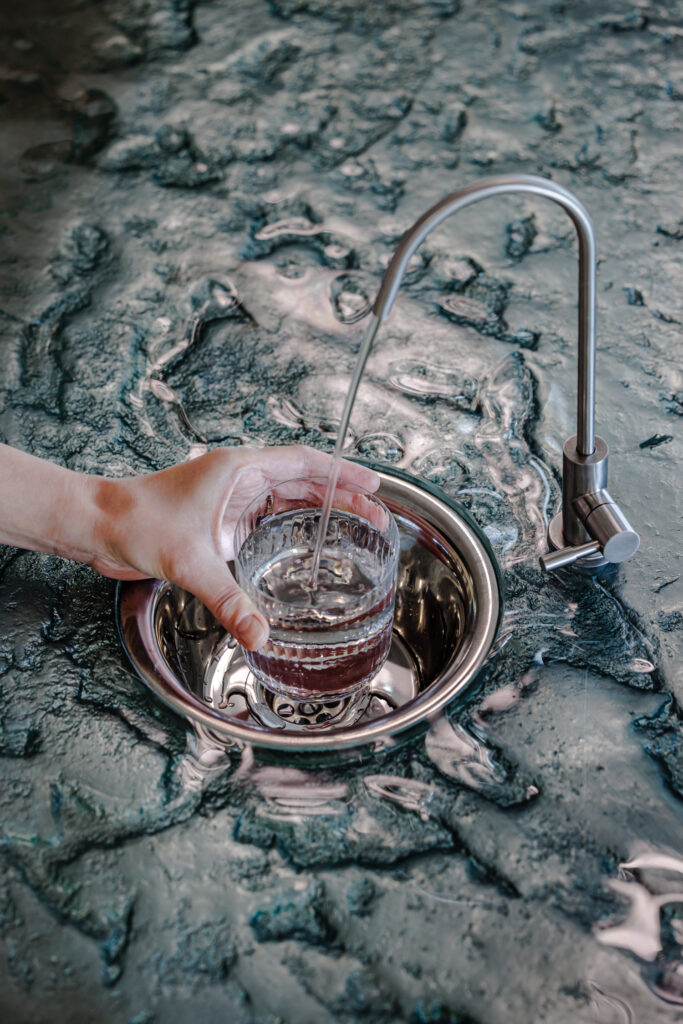
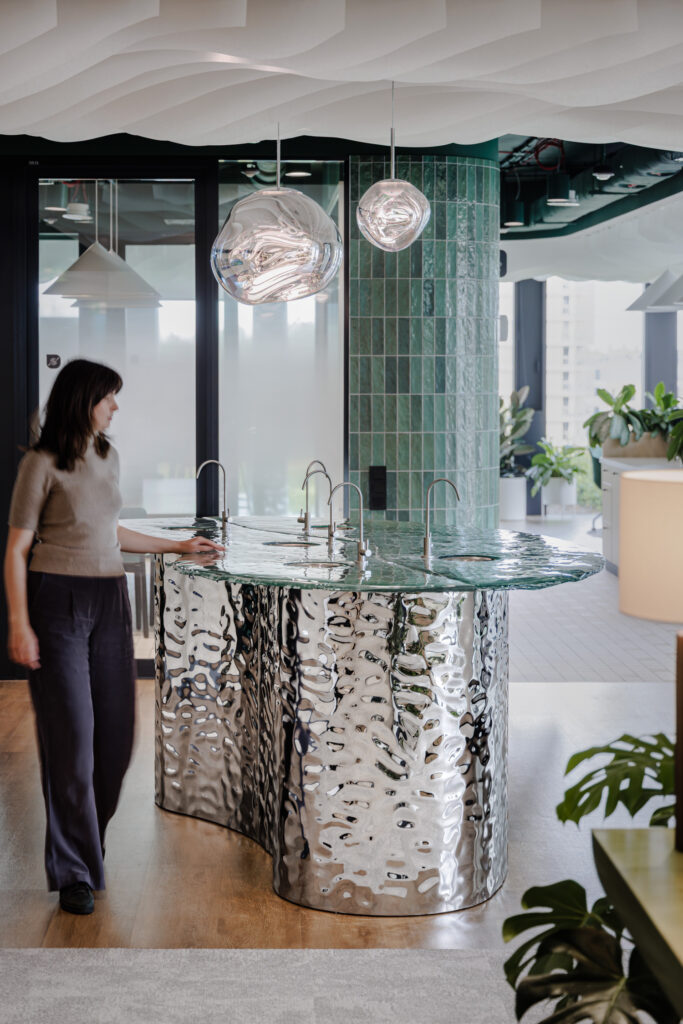
Mineral Water Pump Room at LUX MED headquarters in Warsaw. Idea: Dominika Zielińska, Office concept and design: Workplace. Photo: Adam Grzesik.
Wherever possible, I introduce greenery both inside and outside buildings, creating urban farms, terrace herb gardens or planters filled with flowering plants. These elements provide stimuli that require a low level of cognitive processing: natural forms, scents including phytoncides, and the calming movement of plants in the wind. At the same time, they support urban biodiversity, something we urgently need for health in environments dominated by glass and concrete.
In summary, I create either targeted interventions or entire multisensory ecosystems within office environments, based on natural and evolutionarily safe patterns. I describe these solutions as caring technologies, systems that support the wellbeing of the people who work within them from the inside out through food, hydration and light. Their purpose is to reveal calm, better sleep and attentiveness in a rapidly accelerating world saturated with stimuli and information.
In essence, what I do is cultivation, more precisely the cultivation and care of wellbeing. That is why I named my brand mood.farm.
Paulina Granowska is an expert in sustainable and regenerative development. She is the founder of the NASDRA Institute, a company conducting transdisciplinary research on circularity, health, food, and climate change. Through her mood.farm brand, she implements caring technologies that support both urban ecosystems and workplace well-being—from biophilia and vertical farms to restorative lighting aligned with ESG goals.