


Who Deserves a Second Chance? The Met Cancels Galliano
Marcin Szczelina
It was meant to be one of the most important fashion exhibitions of recent years. Instead, it has become an exhibition we will never see. The Metropolitan Museum of Art has cancelled its planned 2027 retrospective of John Galliano following a wave of protests over the antisemitic, racist and anti-Asian remarks he made fifteen years ago. The paradox is that this was precisely the history the exhibition intended to confront. That is why “John Galliano: Horizons” is no longer simply a story about fashion, or even about one of the most influential designers of the past four decades. It is a story about memory and responsibility, about the architecture of institutions, about the possibility of making amends, and ultimately about who gets to decide today when a person has earned a second chance — and whether we apply the same moral standard to everyone.
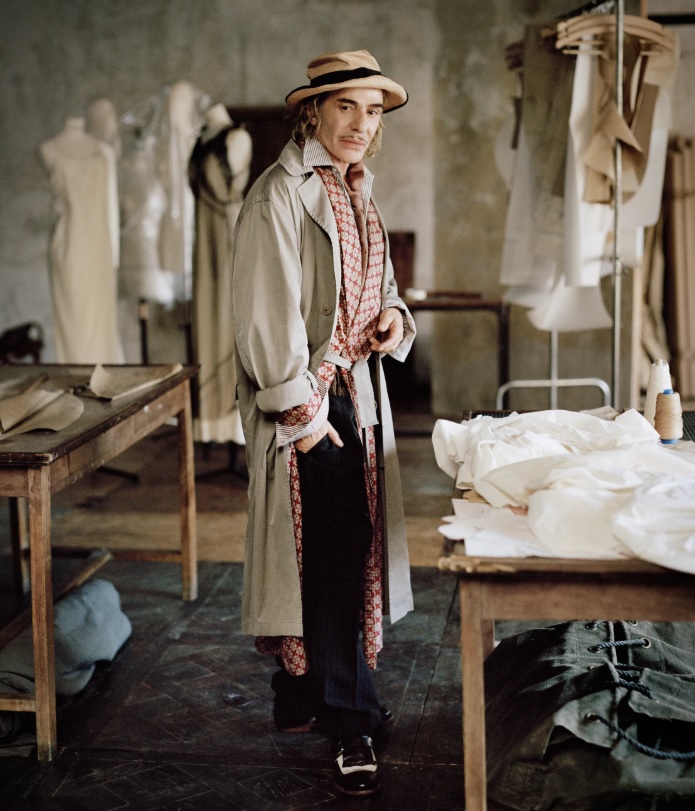
John Galliano, photographed in 2026.Photographed by Nikolai von Bismarck
On 31 August, the Metropolitan Museum of Art issued a statement that brought to an end a story that had lasted exactly one month. “John Galliano: Horizons”, the first major museum exhibition to encompass the designer’s entire career, announced on 31 July and scheduled to run from 9 May 2027 to 9 January 2028, will not take place. The Met’s director, Max Hollein, announced that following discussions with Galliano, both parties had decided not to proceed with the project. The museum will now prepare a different spring exhibition for the Costume Institute, along with a new concept for the 2027 Met Gala.
Galliano wrote in a statement that he had made the decision “with great sadness”. Yet he does not attempt to renegotiate his own past or relativise what happened fifteen years ago. He acknowledges that he continues to take full responsibility for the pain caused by his words, particularly to the Jewish and Asian communities, and that he remains deeply sorry.
The most important part of his statement, however, comes a moment later. The designer writes that genuine amends are not made through an exhibition, institutional recognition or a single public gesture, but through an ongoing responsibility demonstrated by listening, learning and one’s own actions. In the same statement, he mentions fifteen years of sobriety and recovery from addiction. That sentence could be treated as the end of the matter. But it could just as easily be where we begin, because this was precisely the problem around which Andrew Bolton intended to construct “Horizons”.
This was not supposed to be an exhibition of spectacular dresses lined up in a row. The Met planned to present more than forty years of Galliano’s work through clothing, accessories, sketches, research notebooks and archival materials, drawing, among other sources, on its own holdings, which constitute the largest museum collection of his work in the world. The story was to begin with the legendary “Les Incroyables”, his 1984 Central Saint Martins graduate collection inspired by revolutionary France and purchased by the London boutique Browns, continue through his own label, Givenchy and Dior, and conclude with Maison Margiela and the hugely acclaimed 2024 Artisanal collection. This matters because the scandal of 2011 sometimes obscures the magnitude of Galliano’s influence on contemporary fashion — both then and now. We are not talking about a designer whose importance was retrospectively invented years later. Galliano won British Designer of the Year four times: in 1987, 1994, 1995 and 1997. In 1995, he became the first British designer to head the French haute couture house Givenchy, and a year later he took over as creative director of Christian Dior, where for more than a decade he was among those setting the pace for the entire luxury industry. His spectacular shows, historical references, masterful use of bias cutting, construction and tailoring, and his ability to build complete worlds around a collection influenced successive generations of designers. Commenting on the cancellation of the exhibition, Anna Wintour called him the most important fashion designer of his generation, while Jonathan Anderson, Dior’s current creative director, has cited Galliano as one of his heroes. Wintour’s opinion can, of course, be dismissed as the voice of someone who has been close to the designer for decades. His place in fashion history is more difficult to ignore. The Met was not planning a Galliano exhibition because his name looked good on an invitation. In the history of the Costume Institute, he was to become only the third living designer — after Yves Saint Laurent in 1983 and Rei Kawakubo in 2017 — to receive an individual retrospective of this stature. This was not simply another seasonal exhibition. Galliano was about to be formally inscribed into the museum canon. And it was precisely the canon that became the problem.
The story that immediately resurfaced after “Horizons” was announced is well known. In 2011, the world saw footage from the Paris bar La Perle in which a drunken Galliano delivers antisemitic abuse, says that he “loves Hitler” and tells people sitting nearby that their ancestors should have been gassed. Other incidents involving racist and anti-Asian abuse were also revealed. Dior first suspended him and then dismissed him, and in September 2011 a Paris court found Galliano guilty of public insults based on origin, religion, race or ethnicity. There is no need to search for a more subtle context for those words. They were repulsive. Galliano later apologised for them and spoke about the shame he felt when watching the footage. At the same time, what followed is more complicated than the classic scenario of a celebrity issuing a statement and waiting for the internet to forget. He entered treatment for alcohol and prescription drug addiction, met with rabbis and representatives of Jewish communities, studied the history of antisemitism and repeatedly addressed his responsibility for his behaviour in public. Not everyone accepted his apologies, and no one can demand that they should. Galliano himself has acknowledged that he understands some people will forgive him and others never will. Fashion, however, allowed him to return. In 2014, he became creative director of Maison Margiela and remained there for ten years, ending that decade with the Artisanal 2024 show, which once again reminded the world why his name occupies such a particular place in the discipline. It was precisely this duality — the magnitude of the work and the weight of the biography — that was supposed to become the material of the Met exhibition.
Andrew Bolton planned it in three parts. The first was to begin with a chronology of Galliano’s career set against historical and cultural events, without skipping 2010 and 2011. The Met explicitly announced that it would address the designer’s antisemitic, racist and anti-Asian behaviour, his dismissal from Dior, the court conviction, his addiction treatment and his subsequent acceptance of responsibility. The museum did not want to construct a simple story of “fall and redemption”, but rather to consider how memory, changing values and historical circumstances shape the reception of creative work. The subsequent sections were to guide visitors through the sources of Galliano’s imagination and the design process itself, from research and sketch to finished object. The Met therefore had no intention of hiding the problem. It intended to make the problem part of the exhibition. That distinction is fundamental, because it shifts the question away from whether Galliano said antisemitic things — he did — and towards whether a museum, by showing his work fifteen years later, automatically absolves him.
After “Horizons” was announced, it became clear that for some members of the public, politicians and donors, the line between showing and honouring was considerably less distinct. Julie Menin, Speaker of the New York City Council, the first Jewish woman to hold that position and the daughter of a Holocaust survivor, spoke out against the project. According to American media reports, some Met donors also protested. The timing proved particularly unfortunate. The 2027 Met Gala was scheduled for 3 May, the evening on which Yom HaShoah begins. The exhibition itself was to open six days later, on 9 May, but the most spectacular event in the fashion world would therefore have accompanied a project devoted to Galliano at precisely the moment Holocaust Remembrance Day began.
Inside a museum gallery, context can be constructed. A document can be placed beside a dress, contradictions can be exposed, and the viewer can be left in a state of discomfort. The Met Gala operates according to a different logic. It is a spectacle of celebrity, money, photography and desire, and its media power is so immense that it is difficult to pretend it functions merely as a neutral opening for an exhibition. The possibility of redemption does not, after all, automatically entail a right to every honour. Galliano has not been erased from fashion history; the question was rather whether the Met should build its most prestigious annual event around him. And yet even within Jewish communities there was no single answer to this question. Before announcing the project, the Met had already organised meetings between Galliano and representatives of Jewish communities. Some leaders who had met him personally and observed his process of making amends considered it genuine. Others later strongly opposed the exhibition.
That tension is one of the most interesting elements of the entire story because it allows us to move beyond the comfortable division between Galliano’s defenders and opponents. It is possible, simultaneously, to regard his words as unforgivable, to acknowledge the possibility of human change, and to wonder whether an individual retrospective at the Met is nevertheless something more than a critical examination of an artist’s work. Because if a person commits an act, suffers its consequences, is convicted, apologises, enters treatment, remains sober for fifteen years and attempts to change his behaviour, a question arises that cannot be resolved in a single press release: what, exactly, must that person do before we allow for the possibility that he has changed?
In Galliano’s case, the question is particularly interesting because fashion, for him, has never ended with the garment. His shows were total environments in which scenography, lighting, music, choreography and location were not merely settings for the collection but part of the collection itself. Galliano did not so much present clothes as construct, for a dozen or so minutes, a world in which those clothes could exist. Perhaps that is precisely why his encounter with the architecture of Maison Margiela proved so natural.
When Dutch-Bahraini architect Anne Holtrop began working on a new architectural identity for the fashion house in 2018, his starting point was the Maison Margiela codes defined by Galliano. One of them was “Anonymity of the Lining”: bringing the lining — what, according to the logic of a garment, should remain hidden — to the surface. Another was “Décortiqué”, reducing the garment to its structural skeleton while leaving enough elements intact for its original form to remain recognisable. This mechanism has a fascinating architectural counterpart in the work of Jürgen Mayer H., who for more than two decades has collected security patterns printed on the inside of envelopes containing confidential documents. They were created to conceal information, but Mayer H. extracts them from the interior and enlarges them to the scale of architecture. In his SW35 project in Stuttgart, a pattern that would normally protect data from someone else’s gaze migrates onto the building’s façade. There is a beautiful paradox here: something created to remain invisible inside an envelope becomes ornament on the outer “envelope” of architecture. The secret comes to the surface. Holtrop did something similar, except that instead of graphics he used material itself. The plaster walls and columns of Maison Margiela were cast in textile moulds that, under the weight of the material, deformed slightly differently each time. Once the fabric was removed, its folds, tensions and traces remained embedded in the plaster. The architect has said that in this way the walls are turned inside out: we see their lining, their interior, the memory of a material that is no longer physically there. What is more, the flow of inspiration did not stop with architecture. A few months after showing Galliano the first models of the plaster casts, Holtrop saw the Artisanal Fall/Winter 2018 collection Galliano was preparing. Photographs of those same forms appeared on the moodboards. Clothing inspired architecture; architecture returned to clothing. Fabric became wall, and wall became fabric again.
That is why Margiela’s architecture is more than an interesting footnote to Galliano’s story. It provides a metaphor through which we can understand what has now happened to the Metropolitan Museum of Art itself. The controversy surrounding “Horizons” did to the museum exactly what Holtrop did to the wall: it turned it inside out.
Instead of the monumental façade of an institution, we saw its lining — curators, trustees, politicians, donors, money, reputation, responsibility towards the public and the limits of institutional courage. We have no evidence that money determined the cancellation of the exhibition, and it would be wrong to suggest otherwise. What we do know is that political and social pressure emerged, that representatives of Jewish communities and some donors protested, and that exactly one month after the project was officially announced, Galliano and the Met jointly abandoned it. The question that remains, then, is whether a museum should be a place that issues moral verdicts, or a space in which ambiguity can also be examined. After the project was cancelled, Andrew Bolton spoke about the responsibility of museums to confront difficult histories with rigour, honesty and care. It is difficult to disagree with him. Yet that is precisely why the abandonment of “Horizons” leaves a sense of dissatisfaction. A museum does not have to love its protagonists. It does not have to absolve them or offer the viewer a morally comfortable ending. Its value may lie precisely in its ability to place, within the same space, the beauty of an object and the ugliness of a biography, artistic achievement and human responsibility, without pretending that one automatically cancels out the other.
Architecture knows this problem all too well. One of its most uncomfortable examples is Philip Johnson, a fundamental figure in twentieth-century American architecture, the first director of the Department of Architecture at the Museum of Modern Art, co-creator of the 1932 exhibition “Modern Architecture: International Exhibition”, which helped establish the concept of the International Style, later the architect of the Glass House, co-author of the Seagram Building with Mies van der Rohe, and the first recipient of the Pritzker Prize. For decades, Johnson belonged to the absolute establishment of American architecture, influencing not only what was designed but also who was exhibited, published and considered important. Yet in the 1930s, his biography took a direction that cannot be reduced to a handful of unfortunate opinions. Johnson became involved with the American far right, sympathised with Nazism, attended the Nazi Party rally in Nuremberg, associated himself with the movement of the antisemitic radio preacher Charles Coughlin, and maintained contacts with representatives of Nazi Germany. His biographer Mark Lamster described the scale of that involvement in exceptionally stark terms, calling Johnson an unpaid agent of the Nazi state. And yet after the war Johnson did not disappear. He returned to MoMA, became involved with its architecture department again, joined the museum’s board and became a significant donor, built his position over the following decades, and saw his architecture enter the canon. In 1979, he became the first recipient of the Pritzker Architecture Prize. The Glass House did not disappear from the history of modernism, the Seagram Building did not cease to be one of the most important skyscrapers of the twentieth century, and Johnson’s name remained at the very centre of American architectural culture for decades. That does not mean history absolved him. On the contrary, today we are examining ever more closely precisely that part of his biography which, for decades, it was more convenient to treat as a youthful political episode. In 2020, architects and scholars associated with the Johnson Study Group called for his name to be removed from spaces at MoMA and the Harvard Graduate School of Design because of his racism, white supremacism and fascist activity. MoMA itself is also participating today in a critical reassessment of his legacy. Perhaps this is what a mature culture of remembrance should look like: not amputating an uncomfortable fragment of history, but showing the entire organism, even when part of the picture turns out to be repulsive. Johnson is not, moreover, the only case in which the history of modernism proves considerably less pure than the whiteness of its buildings. During the war, Le Corbusier attempted to find a place for his urban ambitions within the authoritarian Vichy regime, although the nature and extent of his political involvement remain disputed among historians. Mies van der Rohe, before leaving Germany for the United States, also attempted to function within the reality of the Third Reich, entering, among other things, the competition for the Reichsbank and looking for opportunities to continue working within a system increasingly subordinated to Nazi politics. None of these facts caused us to stop studying their architecture. Chandigarh has not been erased from the map of modernism, the Barcelona Pavilion remains one of the most important buildings of the twentieth century, and the Glass House is still an icon. What has changed — and should continue to change — is the way we tell the stories of their authors.
I need to draw a very clear line here. Invoking Johnson, Le Corbusier or Mies is not an attempt to justify Galliano’s antisemitism. Someone else’s antisemitism does not excuse antisemitism; fascism is not relativised by the fact that outstanding creators were also fascinated by it; and a great work grants no one moral immunity. These histories lead us to a different question: why, in one case, do we accept that the role of an institution is to preserve the work while critically telling the full — including the repulsive — biography of its author, while in another, the very act of showing the work begins to be equated with morally absolving the person? Philip Johnson should remain in architectural history not because his fascination with fascism has ceased to matter, but precisely together with it. We do not need a cleaner Johnson. We need a fuller Johnson. Just as we do not need a Galliano purified by the beauty of his dresses. We need a history capable of holding both facts at once. That is precisely what the Met ultimately chose not to do.
“John Galliano: Horizons” could have placed extraordinary creative work alongside repulsive words, design genius alongside human weakness, punishment alongside an attempt to make amends, without forcing the viewer to choose one comfortable version of a person. All the more so because, from the outset, the Met had announced that the 2011 scandal would not be hidden in a footnote but would become part of the exhibition’s narrative itself. That is why, for me, the question is not: does Galliano deserve absolution? A museum is not there to grant absolution. The far more interesting question is this: are we still capable of showing people whom we cannot judge unequivocally?
If we begin to expect museums to contain only creators whose biographies pass a contemporary test of moral impeccability, we will very quickly have to reconstruct a considerable part of the history of art, architecture, design, film, literature and music. This is not an argument for impunity, nor for separating the work from its creator at all costs. It is an argument for distinguishing between showing and absolving, analysis and celebration, critical examination and monument-building. Galliano suffered the consequences of his actions. He lost Dior, was convicted by a French court, entered treatment, spent the following years publicly confronting his past, and returned to his profession. Not everyone forgave him, and no one can demand that they should. But if, even after fifteen years of change, the question of possible rehabilitation remains inappropriate, it is worth asking what rehabilitation is actually supposed to mean.
Is there a road back, or does contemporary culture now recognise only a life sentence handed down not by a court, but by institutional memory? The question becomes even more uncomfortable when we look beyond Fifth Avenue. Because in September 2026 it is impossible to write honestly about antisemitism, Holocaust remembrance and the moral responsibility of cultural institutions while leaving entirely outside the frame what has been happening in Gaza for almost three years. Not because Gaza should be equated with the Holocaust — such an equation would be historically false and intellectually sterile — but because memory only has meaning when we are capable of applying the moral obligation that follows from it to the present as well. And so we debate words spoken by a drunken Galliano in a Paris bar in 2011 — words that were disgusting and indefensible — while before our eyes a catastrophe continues whose scale is now described not by metaphors but by tens of thousands of victims. According to UNICEF, by the end of June 2026 more than 73,000 Palestinians had been reported killed in Gaza, including at least 21,700 children; more than 173,500 people had been injured, including at least 45,000 children. Millions of people have been forced from their homes, often repeatedly, while a vast proportion of buildings and infrastructure has been destroyed or damaged. Even after the October 2025 ceasefire, the violence did not disappear: by the end of August 2026, OCHA reported more than 1,300 Palestinian deaths since the agreement came into effect.
Even these numbers are not a final account. People remain missing beneath the rubble, and establishing a definitive toll amid destroyed infrastructure, mass displacement and continuing violence is impossible. The figures provided by the UN and humanitarian organisations should therefore be understood as a documented picture of the scale of the catastrophe, not its final word. I am not invoking these numbers in order to use the suffering of one group of people against the suffering of another. Quite the opposite.
Holocaust remembrance cannot end with remembering the Holocaust if it is to remain one of the fundamental moral experiences of the contemporary world. Its universal meaning must also lie in a particular sensitivity to dehumanisation, civilian deaths, the killing of children, forced displacement, the dispossession of people from their homes, and the kind of language that allows us to stop seeing another human being as human — regardless of nationality, religion or which side of a border they happened to be born on. Responsibility for the actions of the State of Israel is not the responsibility of Jews as a community, and those categories must never be conflated. Galliano’s own story, in fact, demonstrates perfectly well that there is no single “Jewish position”: there were leaders who regarded his attempts to make amends as genuine, and there were those who considered a Met retrospective an unacceptable honour. The problem lies elsewhere: in the consistency with which cultural institutions apply their own moral language. If we are capable of holding a word spoken fifteen years ago to account with enormous precision, we should be capable of looking with comparable attention at human lives being taken today. If historical memory activates the full force of institutional opposition in one case but becomes considerably less unequivocal in the face of suffering unfolding in real time, then the problem is no longer an excess of political correctness. The problem becomes its selectivity. And this brings us back to Galliano, because perhaps the most interesting question in this entire story was never whether his words were acceptable. They were not. Nor is it whether everyone has an obligation to forgive him, because no such obligation exists.
The question is rather: who has the right today to decide that a person has done enough to be given a second chance — or that they will never receive one — and according to what standard do we make that decision? Galliano himself partially answered this in his latest statement, writing that making amends is not achieved through an exhibition or institutional recognition. Perhaps he is right. But for exactly the same reason, the absence of an exhibition should not be treated as a moral solution to a problem far larger than one designer. The Met had the opportunity to create a space in which creative genius, repulsive behaviour, punishment, addiction, responsibility, memory and the possibility of change could coexist without an easy verdict. It decided not to build that space. What remains, then, is an exhibition that will never exist, and with it an image of an institution turned inside out, almost like Anne Holtrop’s plaster walls for Maison Margiela. We can see its lining: values, interests, responsibility, money, fears and limits. Perhaps this absence now tells us more about culture than all the dresses, sketches, toiles and archival materials Andrew Bolton might have arranged in the gallery.
Memory, if it is to be more than ritual, cannot serve solely to pass judgement on the past. It must help us recognise the present, including when the picture before us is politically uncomfortable. A museum should not relieve us of that effort. It should reveal contradictions, allow us to look for longer, and refuse to conceal whatever does not fit a convenient narrative. Perhaps, then, the most important question after the cancellation of “John Galliano: Horizons” is no longer even whether the Met made the right decision. The far more interesting question is about ourselves: what, exactly, do we expect from memory? Should it be an archive of guilt from which, once a name has been entered, it can never be removed? Or should it be a tool that allows us to understand people together with their contradictions, mistakes, responsibilities and capacity for change? Philip Johnson has remained in architectural history together with his fascist past. Galliano will remain in fashion history together with his antisemitic remarks. One can no longer be separated from the other, and perhaps we should not even try. A mature culture, after all, is not one that forgets. It is one that remembers enough not to need simple answers. Otherwise memory becomes decoration, and morality begins to function like a façade: presentable from the front, considerably more complicated from within. When we change its measure depending on whom we happen to be judging, it ceases to be morality. It becomes politics.
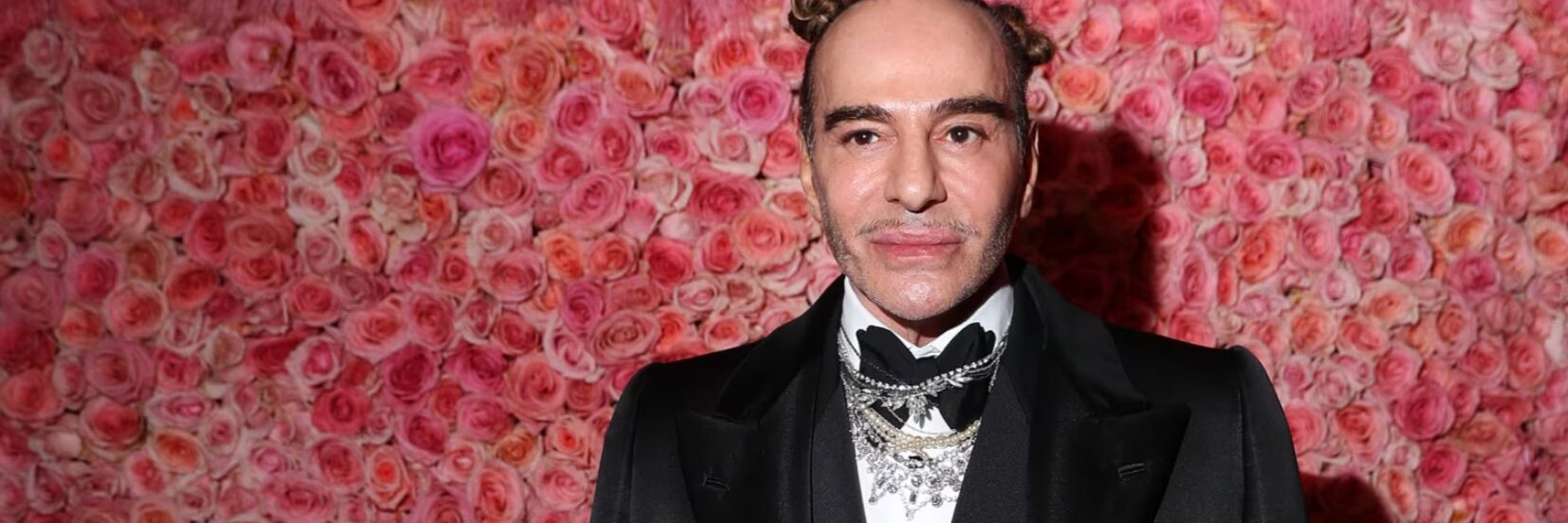
Opening photo by Kevin Tachman/ MG19/ Getty Images
Marcin Szczelina – architecture critic and curator based in Warsaw. Editor-in-chief of Architecture Snob magazine. An expert of the EU Prize for Contemporary Architecture – Mies van der Rohe Award.