


Architecture That Refuses to Impress
Interview by Marcin Szczelina
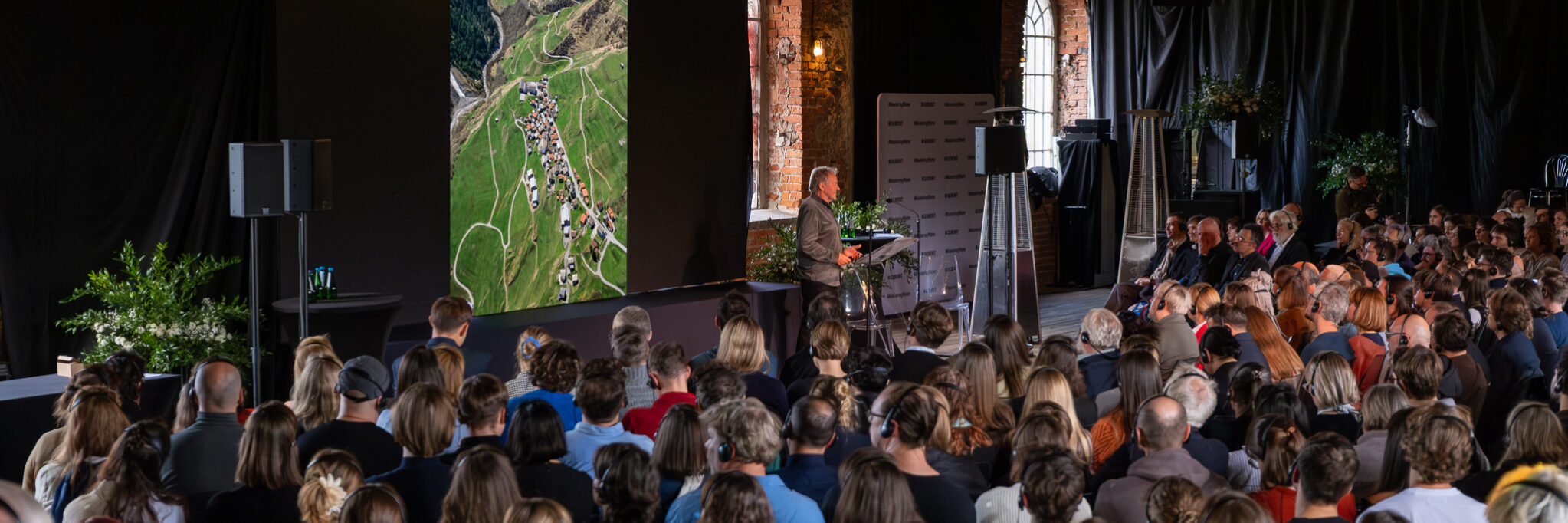
Invited to Poland by Geberit, Swiss architect Gion A. Caminada speaks not about spectacle but about substance. For more than four decades, his works — from Stiva da Morts to Casa Caminada — have redefined the meaning of rootedness in contemporary architecture. His buildings emerge from wood, stone, and silence, yet they resonate with extraordinary depth. In this conversation with Architecture Snob, Caminada reflects on time, light, community, and tenderness — a word that, in his hands, becomes less an emotion and more an ethic.
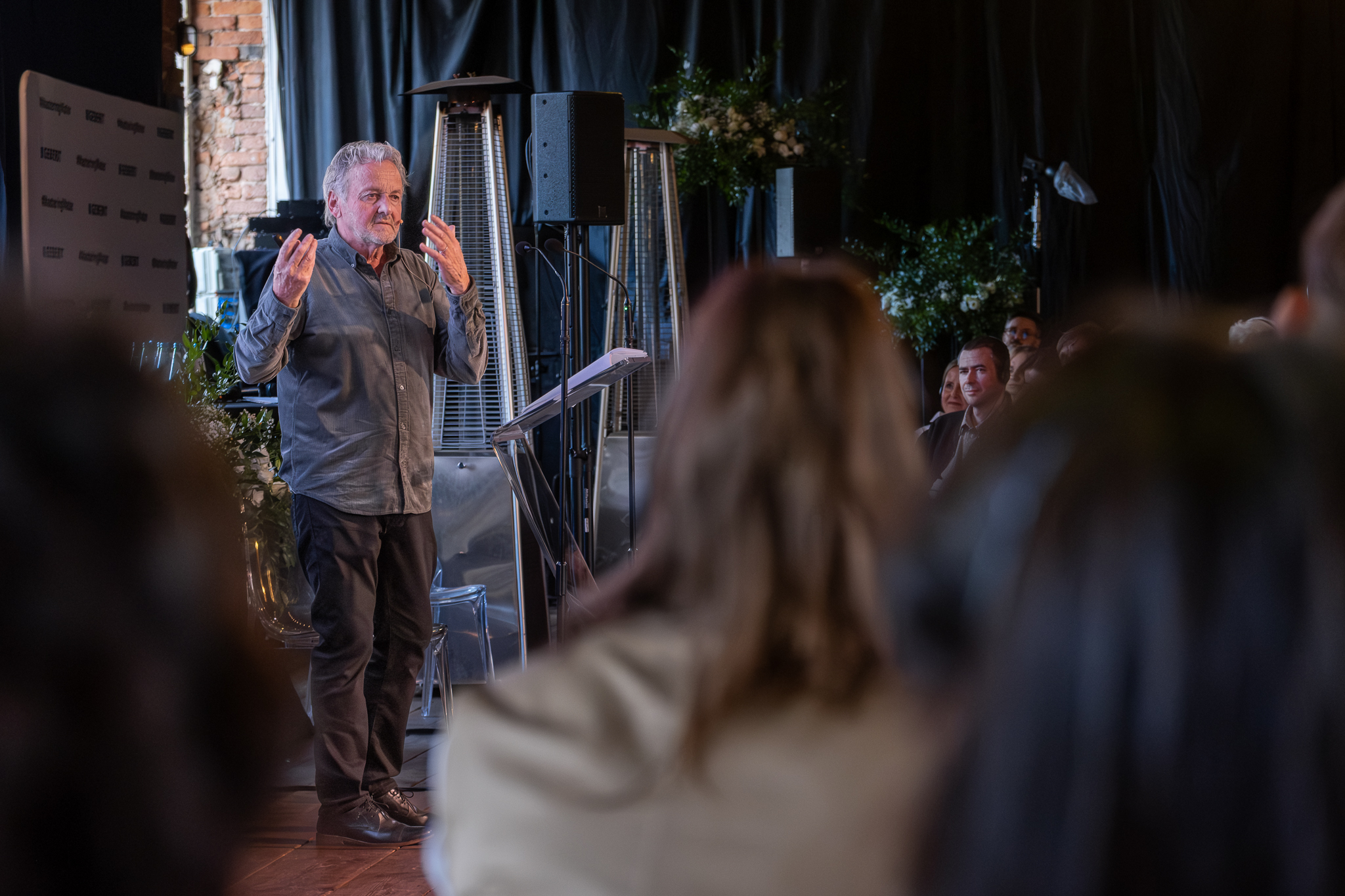
Marcin Szczelina: Before becoming an architect, you trained as a carpenter. You once said that you wanted to understand materials through your hands. Does this experience still shape the way you design?
Gion A. Caminada: Absolutely. Craftsmanship taught me patience — and humility. When you cut, polish, and join timber, you begin to understand that it is alive. It breathes, expands, and carries memories. Working with wood means accepting its rhythm, not forcing your own. Every knot and imperfection tells a story. As a carpenter, you learn that not everything can be fixed — and that is the true lesson of architecture: to accept limits. Respect is the beginning of design. Without it, buildings become only gestures.
You often say that materials have a voice. What does that mean to you?
Materials speak when architects stop shouting. Their voice can be heard in how light slides across a surface, how a floorboard creaks, or how a wall radiates warmth. Architecture is a dialogue — between matter and human presence. A wall that resonates, a space that breathes, a door that answers your movement: these are not metaphors but forms of conversation. The task is not to force matter into beauty, but to allow it to reveal its own dignity.
Has contemporary architecture forgotten how to listen?
Too often, yes. Many architects use materials like borrowed words — without understanding their meaning. Glass, concrete, metal: they all start to sound the same when disconnected from place. Ornament itself is not the enemy; emptiness is. When decoration replaces structure, meaning dissolves. I prefer to speak about character rather than atmosphere. Atmosphere can be styled; character must be earned. It arises from proportion, construction, and light — from the honesty of things.
In one of your talks, you mentioned that in your native village no one ever said, “the landscape is beautiful” — it simply was.
That is true. When you live inside something, you no longer need to name it. My parents never romanticized the mountains; they worked within them. Today, the landscape has become an image — a view framed by panoramic windows, a background for our lives. But real coexistence requires distance and closeness at once. I prefer small windows to large ones because they focus attention. They remind us that we do not need to see everything to belong somewhere.
So even a window can be philosophical?
Of course. A window defines how we relate to the world. In Stiva da Morts — the house of mourning — the openings are narrow and deep. They allow light to enter softly, but protect the interior from intrusion. People who come there need to be near the world, yet not entirely in it. Architecture must understand that fragility. A window is not for looking; it is for feeling. It is an emotional frame — a border where the human and the natural meet.
How has your relationship with materials evolved in the age of sustainability?
We can no longer build as we once did. Every material carries a moral weight. Concrete is not evil — it can be beautiful, even poetic — but it must be justified. Sustainability is not a trend; it is awareness. Wood, stone, steel, earth — each has its place. The most sustainable architecture is the one that knows when to stop. Limitation, when conscious, becomes a form of intelligence.
Time seems to be another material in your work. How do you design with time?
Time is my favorite collaborator. A building should not fear aging; it should invite it. I try to design structures that become more beautiful as they wear — where timber darkens, stone softens, and traces of use turn into texture. Permanence is not about resisting change but about absorbing it. Architecture, like people, gains meaning through endurance.
And light — how do you shape it?
Light is air made visible. It is not something you “add”; it is something you wait for. I treat light as a slow visitor. It should enter a room with courtesy. The most beautiful light is the one that reveals material rather than itself. Light remembers emotions — people recall not shapes, but how they once felt standing in a certain glow. Architecture that understands light can speak without words.
Can urban architecture be as sensitive as rural architecture?
Yes, but only if it stops pretending to be nature. Cities have their own mountains and rivers — made of concrete, asphalt, and wind. Tenderness in the city means rhythm, not silence. Urban architecture should connect rather than impress. We have built too many walls and too few relationships. The future city will not need more landmarks, but more listening spaces.
What does responsibility mean for you as an architect?
Responsibility begins with refusal. An architect must sometimes say no — to the site, to the investor, even to oneself. In a world obsessed with filling every void, the value of emptiness becomes radical. A place that remains unbuilt can still be an architectural act. Absence is a form of care.
How do you teach architecture at ETH Zürich?
I tell my students to begin with their hands. Draw less, build more. Feel the resistance of material. Smell the wood, sense the weight of a beam. Architecture starts in the body, not on the screen. And I always remind them: if you don’t know for whom you are building, don’t build at all. Architecture without empathy is just geometry.
You often return to the idea of community. What makes architecture truly communal?
Community is not a slogan; it’s a practice. It grows from proximity — from the ability to see and to be seen. In my work, I try to design spaces that allow choice: you can meet others, or you can remain alone. Freedom and connection must coexist. Real public life needs thresholds — those fragile, in-between spaces where encounters happen naturally. Architecture must design not only buildings, but possibilities for relationship.
Your buildings often radiate silence. Can silence be an architectural quality?
Silence is clarity. It appears when nothing is superfluous. It is not the absence of sound but the presence of sense. A silent building doesn’t shout for attention — it listens. Silence allows us to hear ourselves again. Perhaps that is why my architecture is quiet: because I believe that noise has already said enough.
The latest issue of Architecture Snob is dedicated to tenderness. How would you define tenderness in architecture?
Tenderness is attention with courage. It’s not softness but strength without aggression. To design tenderly means to design with empathy — to let materials, people, and places coexist without domination. In Casa Caminada, I wanted to create a building that does not say “look at me,” but rather “come in, stay.” Tenderness is architecture that replaces admiration with understanding.
And could tenderness become a principle of future architecture?
It must — otherwise architecture will lose its humanity. Tenderness is not an emotion but a discipline. It demands time, slowness, and a willingness to feel consequences. In a world obsessed with speed, tenderness is resistance. To build tenderly is to build consciously — knowing that every decision leaves a trace, and that the smallest gesture can carry the greatest weight.
Gion A. Caminada
Architect and Professor at ETH Zürich. Born in 1957 in Vrin, Switzerland. Known for his works rooted in the alpine landscape and crafted through an intimate dialogue between tradition and modernity. His projects — including Stiva da Morts, Mazlaria, and Casa Caminada — explore the social and spiritual dimensions of architecture. Recipient of the Swiss Arc Award for Lifetime Achievement.